Tarboro is 15 minutes from our Rocky Mount headquarters. We drive through here on the way to jobs in eastern Edgecombe County all the time. When you call us, you are not calling a company two hours away hoping they will fit you in. We are already in the area.
The town sits along the Tar River, and that single fact shapes most of the tree work here. The river floods. It has flooded catastrophically multiple times in the last 30 years. Trees growing in the floodplain and along the riverbanks have root systems that have been soaked, dried, re-soaked, and weakened over decades. A water oak that looks solid above ground may have a root plate that is half rotted from sitting in standing water during Hurricane Matthew. We approach every tree near the river with that history in mind.
Tarboro also has one of the best-preserved historic districts in Eastern NC. The homes along St. Andrew Street, Main Street, and the streets surrounding the Town Common have mature pecans, white oaks, and water oaks that are well over a hundred years old. Removing or trimming these trees is not the same as dropping a pine in a subdivision. They require careful rigging, an understanding of how to protect structures that are irreplaceable, and the patience to do it right.
Tree Removal in Tarboro
Historic District Properties
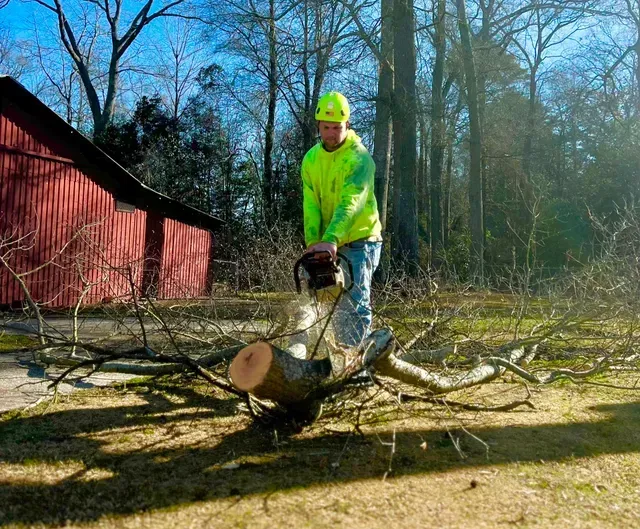
The trees in Tarboro’s historic district are part of what gives the town its character. But they are also old, and old trees fail. When a 90-foot white oak starts dropping limbs on a roof built in 1890, somebody has to take it down without damaging a house that cannot be rebuilt the way it was.
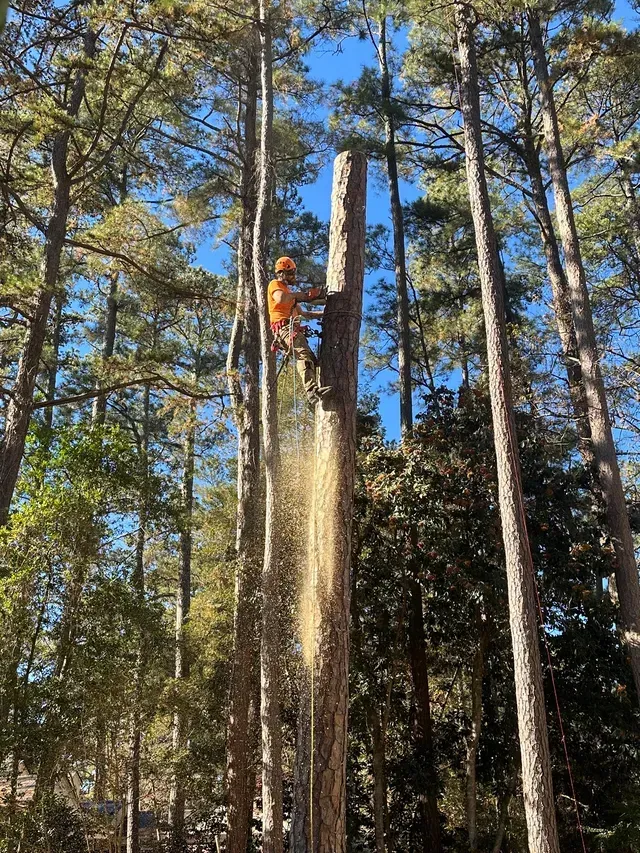
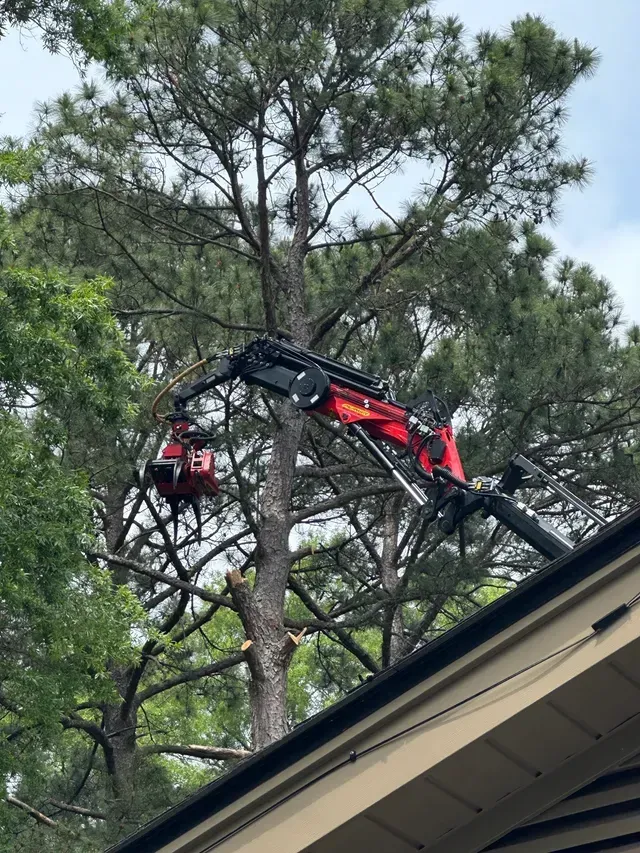
We rig these trees piece by piece. Each section gets roped, cut, and lowered to the ground in a controlled path. No crashing, no swinging, no guessing. For the largest trees over the most sensitive structures, we bring in crane-assisted removal through our rigging partner in Wendell. The crane lifts sections straight up and sets them down in the street or yard, keeping the weight off the house entirely.
Tar River Corridor
Trees along the Tar River from Tarboro through Princeville and downstream toward Greenville have been through repeated flood cycles. Hurricane Floyd in 1999 put Princeville entirely underwater. Hurricane Matthew in 2016 did it again. Between those events, the Tar has flooded dozens of times at lesser levels.
Each flood cycle saturates root zones. Between floods, the soil dries and cracks. Over 25 years of this, root systems degrade even on trees that look healthy. We see water oaks and willow oaks along the river that have full canopies but lean 5 or 10 degrees because the roots on one side have given up. These trees need to come down before they choose their own timing.
Felling in floodplain soil requires extra care. The root plate can pull out of saturated ground more easily than in firm upland soil. We assess the lean, the root exposure, and the soil conditions before we make the first cut.
Residential Neighborhoods
Outside the historic district, Tarboro’s residential areas along Western Boulevard, McNair Road, and the neighborhoods south of town toward Pinetops have the typical Eastern NC tree mix: loblolly pine, sweetgum, and water oak. Pine beetle damage is common in dense pine stands. Water oaks in the 40- to 60-year range are reaching the age where internal decay becomes a real concern.
Land Clearing and Forestry Mulching
The rural areas of Edgecombe County around Tarboro have large parcels that have reverted to woods over the last 10 to 20 years. Former tobacco fields, idle agricultural land, and neglected properties have filled in with volunteer pine and hardwood.
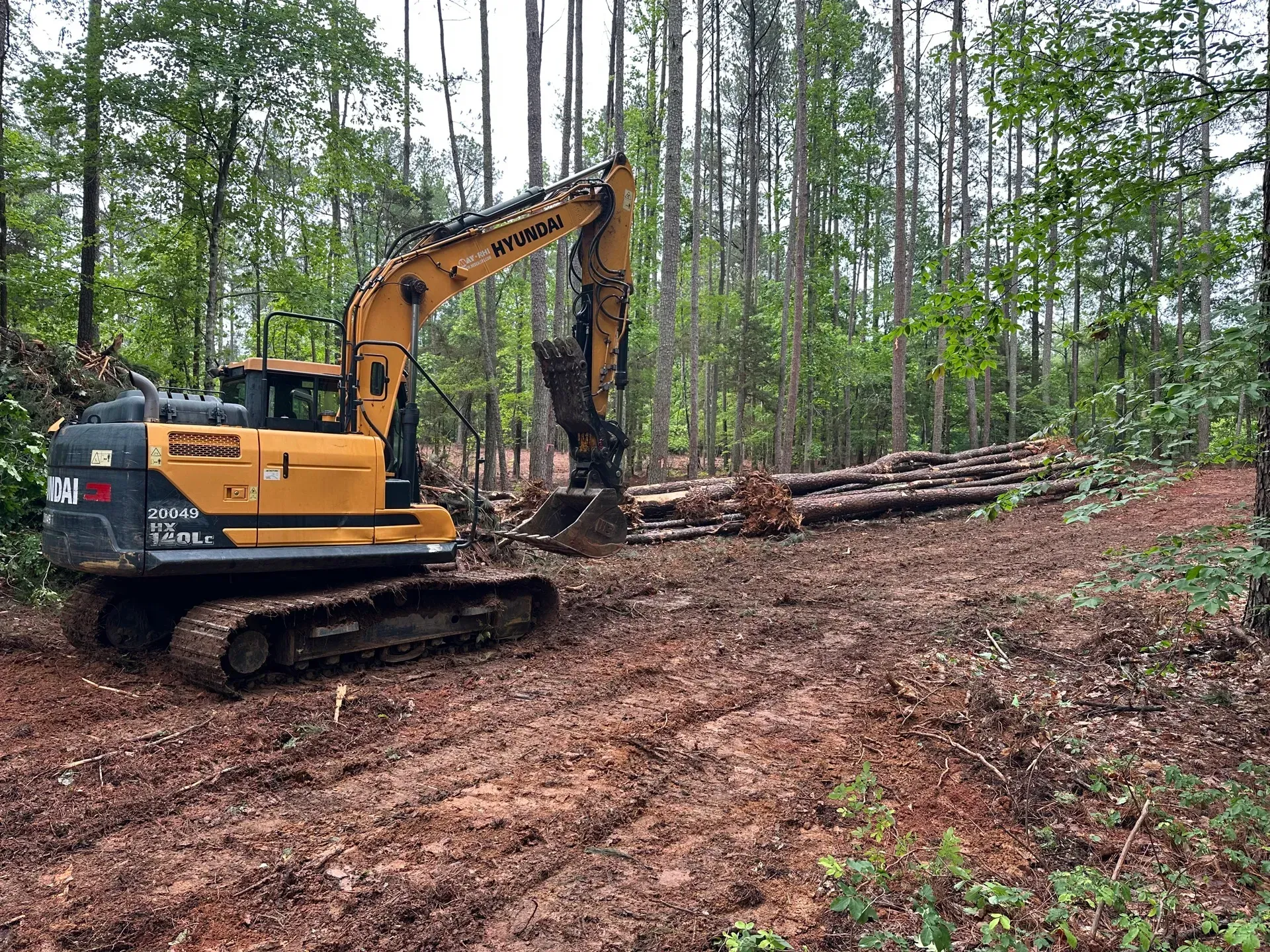
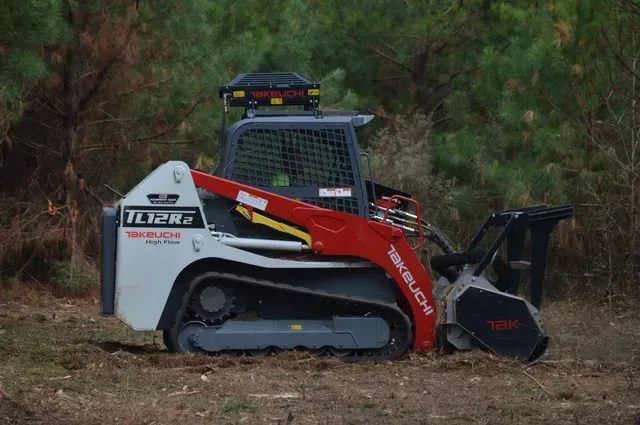
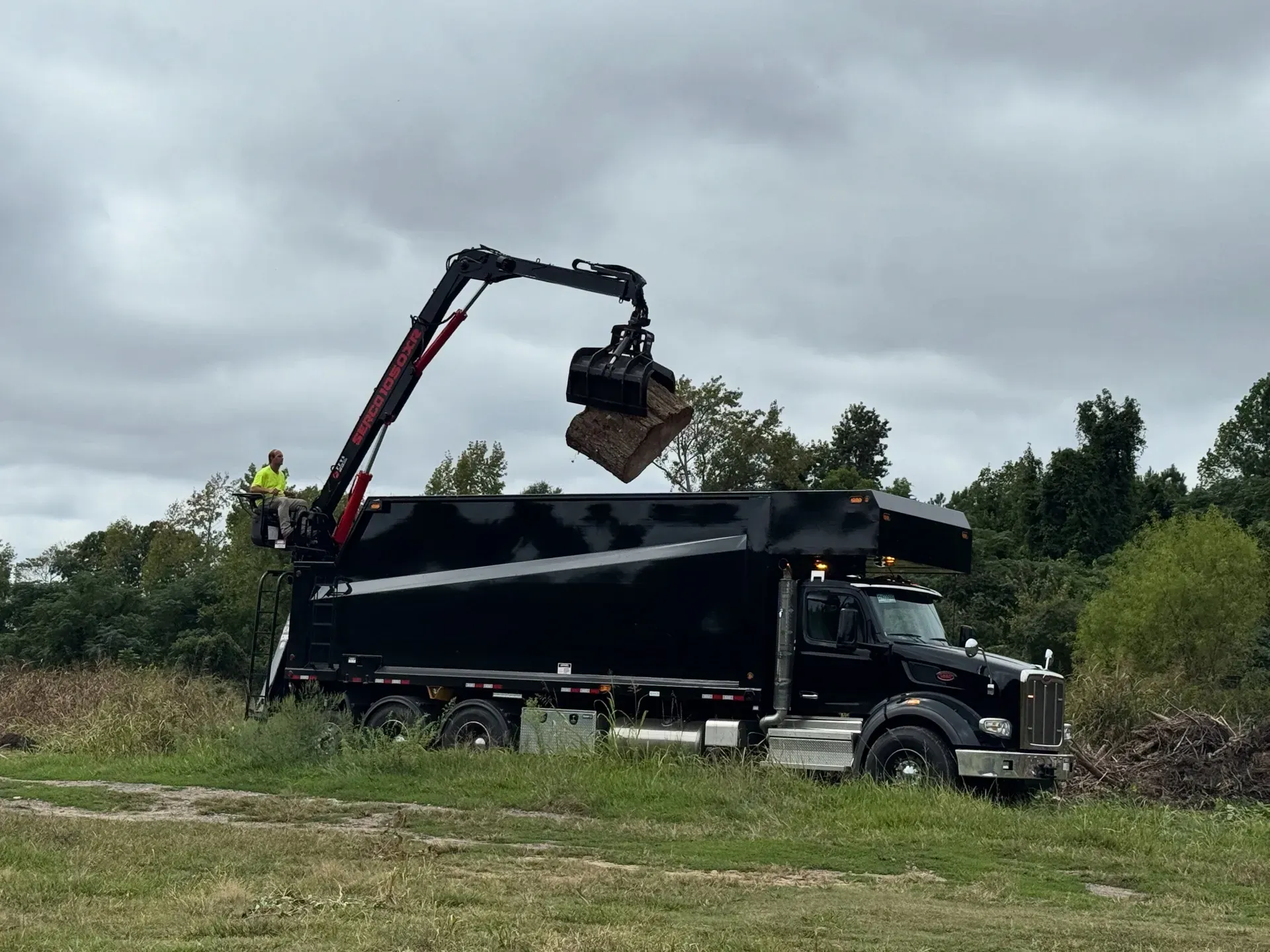
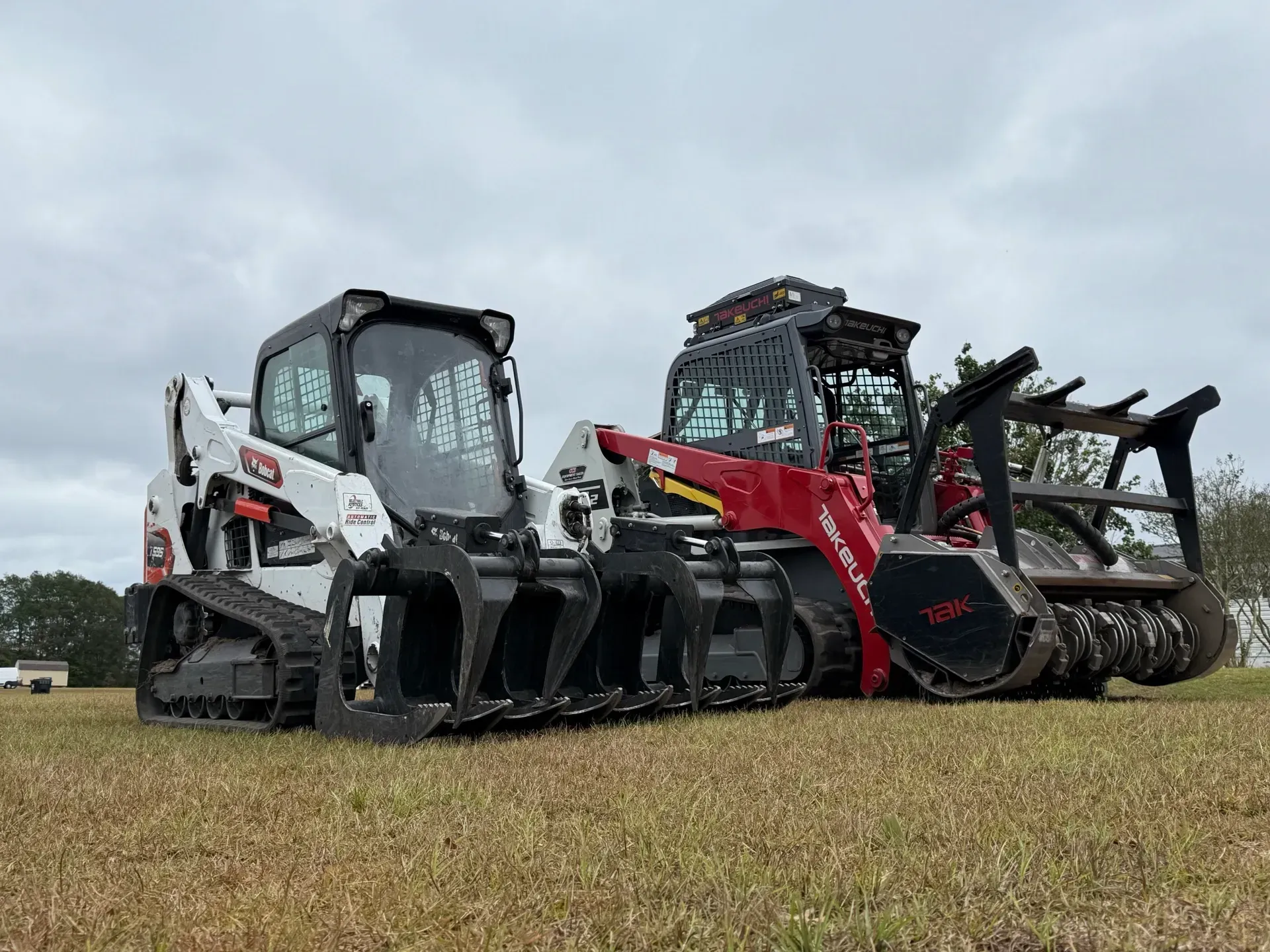
We clear these properties with the right equipment for the job. Our Takeuchi TL12R2 forestry mulcher handles brush and small trees up to 6-8 inches in a single pass. For heavier timber, the Hyundai HX120LC excavator pushes and stacks large trees while the chainsaw crew bucks them. The grapple truck hauls everything that cannot be mulched in place.
Typical land clearing work around Tarboro:
- Residential lot clearing for new construction in the Tarboro town limits
- Agricultural reclamation on former farmland that has grown up in volunteer pine
- Hunting land management on larger rural tracts
- Property cleanup for estates, inherited properties, and bank-owned parcels
Flat terrain and good road access on most Edgecombe County parcels keep equipment mobilization simple, which helps keep costs down.
Storm Damage and Emergency Response
Tarboro catches the worst of Tar River flooding, but tropical storms and hurricanes also bring straight-line wind damage, fallen trees across roads, and trees on structures. Ice storms in winter snap pine canopies and drop heavy limbs on roofs and power lines.
Call (252) 506-0099 any time for emergencies. We are 15 minutes away and respond immediately for trees on houses, across driveways, or on power lines.
After major storms, we run tree removal crews and the grapple truck continuously through Edgecombe County until the backlog is cleared. We prioritize hazards to life and property first, then work through the less urgent cleanup.
Other Services
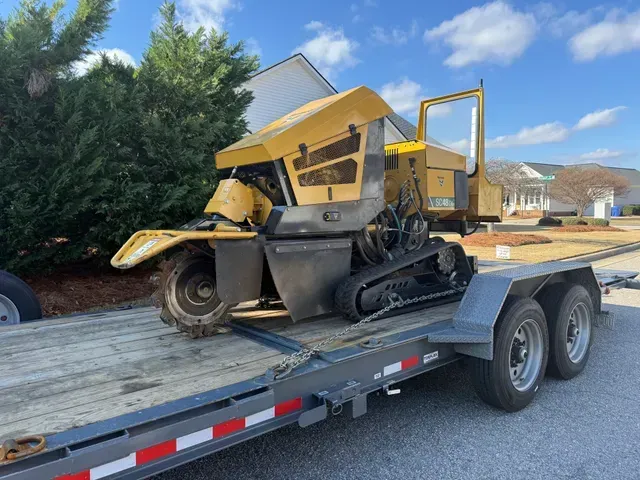
- Stump Grinding - We grind stumps from fresh removals and old stumps that have been sitting for years. $250-$1,000 per stump depending on diameter, with batch discounts for multiple stumps.
- Tree Trimming - Canopy reduction, deadwood removal, clearance trimming over structures and driveways. Important for the large specimen trees in the historic district.
- Commercial Tree Service - Contract maintenance for property managers, the Town of Tarboro, and commercial properties along US-64 and NC-33.
Nearby Service Areas
Tarboro is part of our Edgecombe County service area. We also serve:
- Nash County: Rocky Mount (our headquarters), Nashville, Spring Hope
- Wilson County: Wilson, Elm City
- Pitt County: Greenville, Winterville
- Halifax County: Roanoke Rapids, Weldon
For pricing on all our services, see the pricing guide.
Call (252) 506-0099 for a free estimate on any tree service or land clearing project in Tarboro, NC.