

Lake Gaston is 20,300 acres of reservoir with 350 miles of shoreline, and most of it is lined with trees that nobody has touched in decades. Loblolly pine, white oak, sweetgum, and river birch grow right to the water’s edge on lots that slope 30 feet down from the house to the dock. When one of those trees fails — and they do, every hurricane season and every ice storm — it falls toward the lake, through the dock, across the neighbor’s retaining wall, or onto the house.
Littleton is the NC gateway to Lake Gaston and the center of our Lake Gaston service area. We drive about an hour from our Rocky Mount headquarters via I-95 and NC-158. We make the drive because Lake Gaston waterfront properties need a tree service that understands three things most local operators don’t: Dominion Energy’s shoreline buffer rules, how to rig trees on steep lakefront slopes, and how to coordinate work with owners who live in Virginia or Raleigh and aren’t at the property.
Call (252) 506-0099 for a free on-site estimate on any waterfront or Littleton-area tree work.
What Makes Waterfront Tree Work Different
Tree removal on a Lake Gaston lot is not the same job as tree removal in a Roanoke Rapids subdivision. The trees are the same species but everything else changes.
The slopes. Most lakefront lots drop 15-40 feet from road grade to the waterline. That means equipment either stays at the top and the crew rigs everything uphill, or a tracked machine works the slope on lots with gentler grades. Either way, the access constraint adds crew time and rigging that flat-ground work doesn’t require. A pine that’s a $1,000 removal on flat ground might be $2,500 on a steep lakefront lot because of the rigging and staging.
The buffer. Dominion Energy owns and manages Lake Gaston under a FERC license. Their Shoreline Management Plan defines a vegetation management zone along the shoreline. You can’t just clear-cut to the water — the SMP restricts what you can remove within the buffer. Selective thinning, hazard tree removal, and dead tree removal are generally permitted. Wholesale clearing is not. We walk the shoreline with you, identify what falls inside the buffer, and scope the work accordingly. If you’ve never dealt with the SMP, we’ll explain what it means for your lot.
The absentee owners. A huge percentage of Lake Gaston homes are second homes, vacation rentals, or investment properties. The owner lives in Raleigh, Richmond, Northern Virginia, or farther. They need a tree service that can handle the job without requiring the owner to be on site for every decision.
Our absentee-owner workflow:
- We walk the property and shoot photos + video of every tree in scope
- Send them to you with notes, recommendations, and a written estimate
- You approve by email or phone
- We do the work and send progress photos during the job
- Final completion photos and invoice sent when we’re done
You see everything without driving to the lake. If you want to be there, great. If you can’t, we handle it.
The insurance stakes. Lake Gaston homes are expensive. A $500K-$750K lakefront house is common. A tree through the roof, through the dock, or through the retaining wall is a six-figure claim. Every property owner along the lake should verify their tree contractor carries general liability, workers’ compensation, and commercial auto — all three. We carry all three, and we provide certificates of insurance before any work starts. On a lakefront home, uninsured tree work isn’t just a risk — it’s reckless. See our guide on verifying tree service insurance for the full checklist.
Services on Lake Gaston and Littleton Properties
Waterfront Tree Removal
Lakefront tree removal breaks into two scenarios:
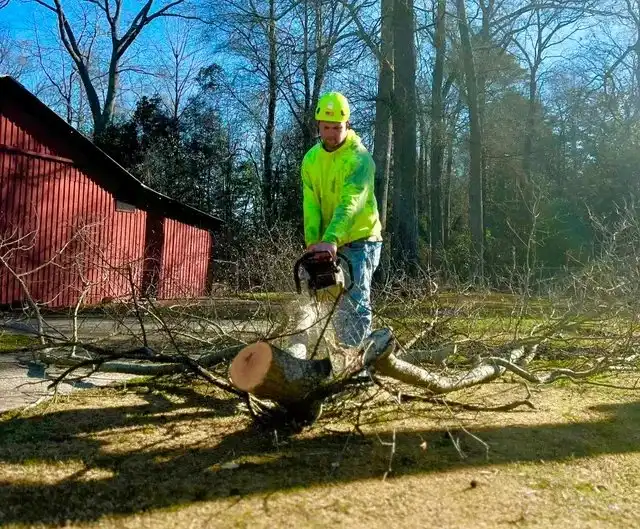
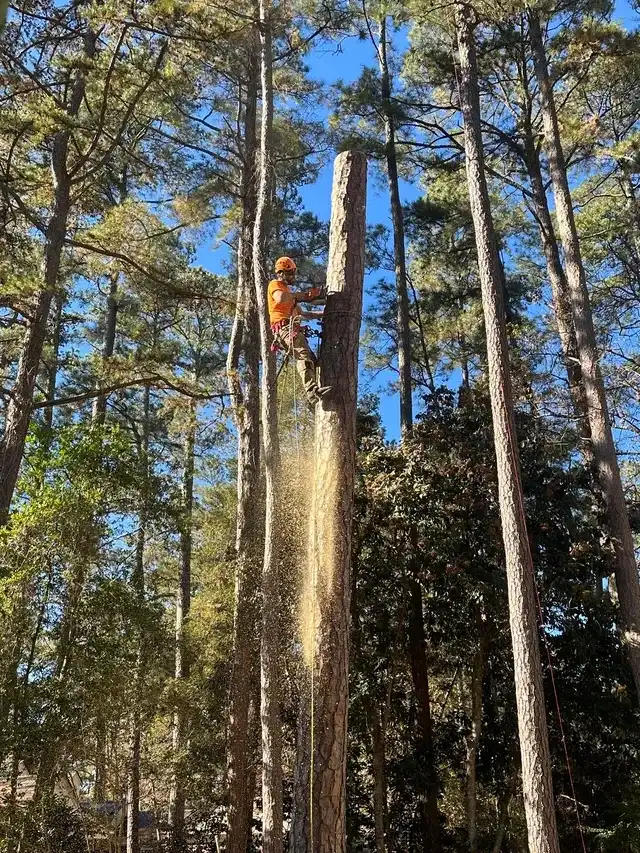
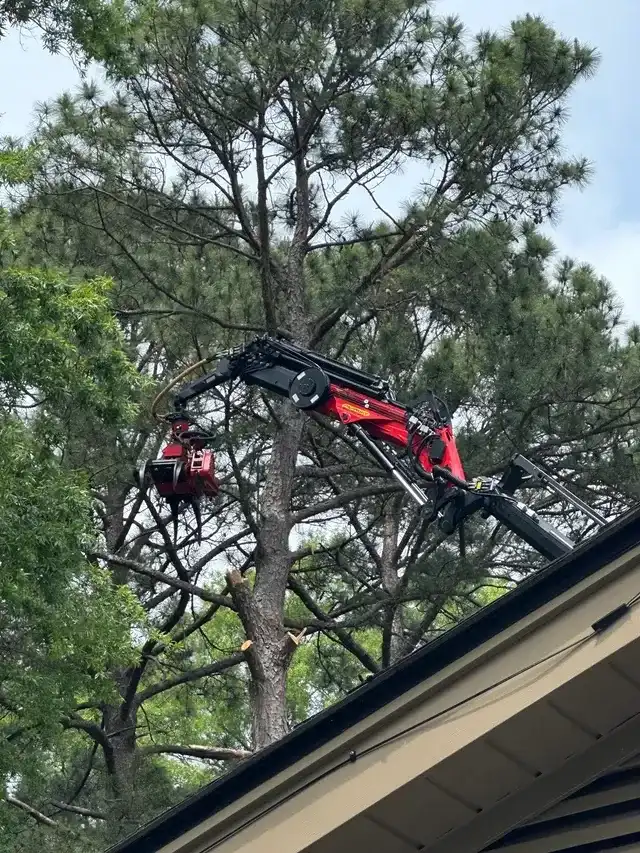
Hazard trees. Dead or declining trees leaning toward the house, the dock, or the neighbor’s property. These are the most urgent — a dead loblolly on a 30-degree slope above a dock is a clock running out. We assess the lean, the root condition, the slope stability, and the rigging path before we touch it. Most lakefront hazard trees get taken apart from the top by a climber, rigging each section uphill to a staging area. For large trees over structures, we bring crane access through our rigging partner in Wendell.
View-thinning removals. Selectively removing trees to open a lake view from the house or deck. This is cosmetic work, not emergency work, but it requires more planning than emergency removal. We walk the view line with you (or your property manager, or via photo markup if you’re remote), tag the trees to remove and the ones to keep, and execute the plan. The goal is a view corridor, not a clear-cut — keeping mature oaks for shade and property value while removing the volunteer pine and underbrush that blocks the sight line.
Waterfront removal typically runs 20-40% above standard rates because of slope access and rigging requirements. A lakefront pine on a steep lot: $2,500-$4,500. Same tree on flat ground: $800-$1,500. The rigging and staging are what drive the difference.
Forestry Mulching and Underbrush Clearing
Lots that haven’t been maintained in years accumulate a wall of underbrush between the house and the water. Privet, holly, sweetgum saplings, volunteer pine seedlings, and greenbrier vines turn a lake view into a green curtain in 3-5 years of neglect.
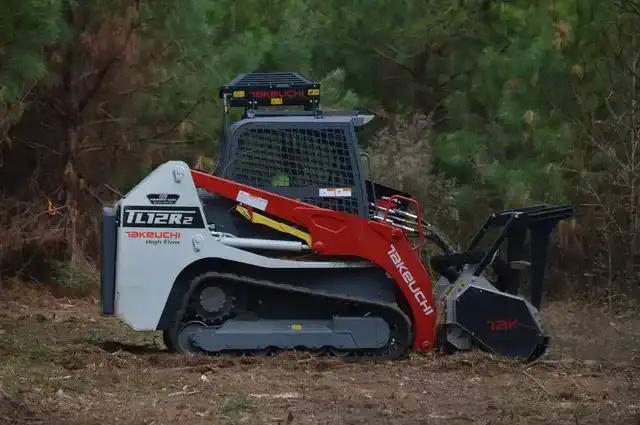
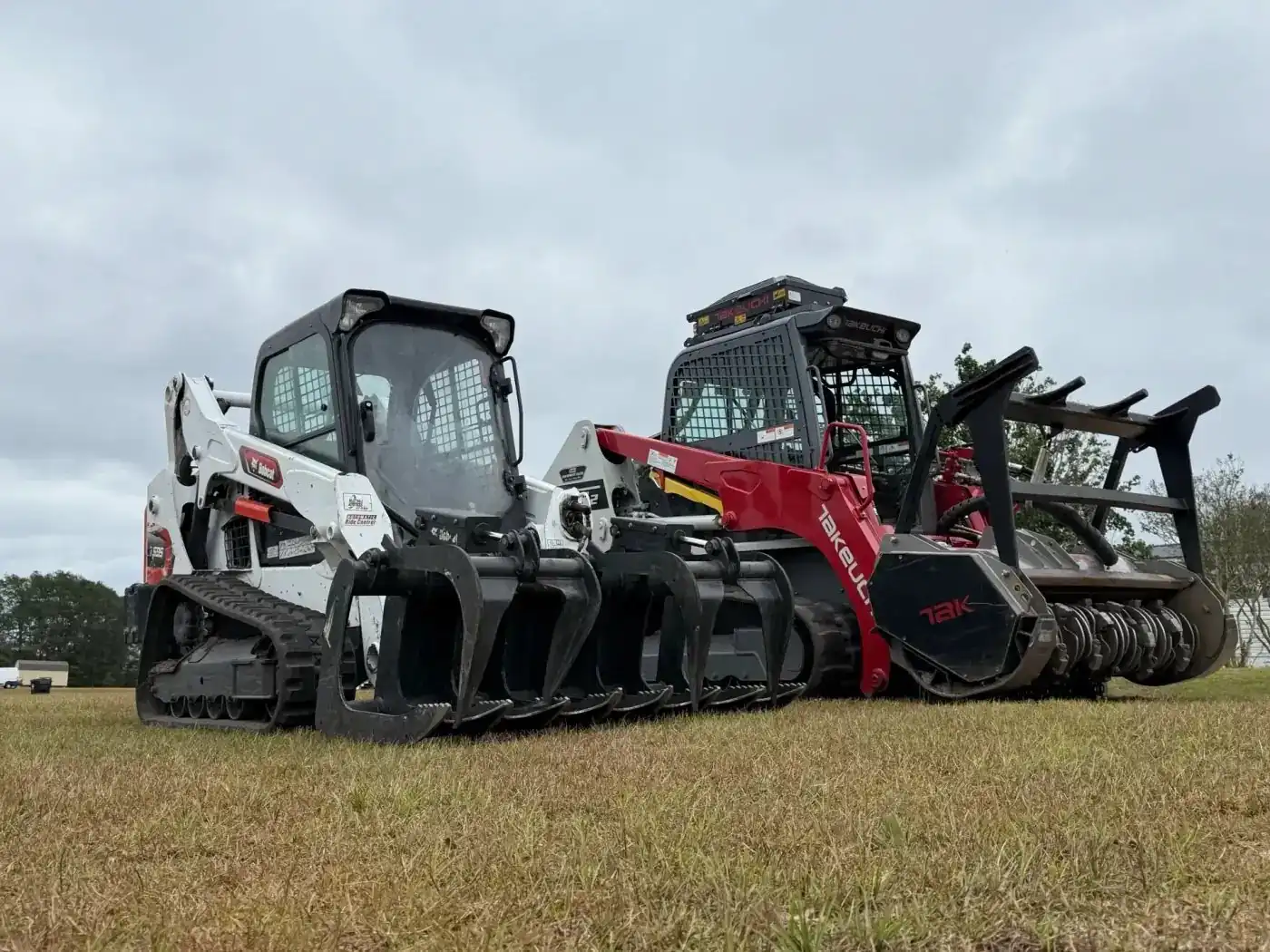
Our Takeuchi TL12R2 with FAE mulcher head handles underbrush and small trees up to 6-8 inches. On lots with moderate slopes and decent access, the mulcher can work down toward the water and clear everything below the canopy trees. On steeper lots, we hand-clear with chainsaws and the climbing crew hauls material uphill to the staging area.
Mulching is the cheapest way to reclaim a lakefront lot that’s grown over. The mulched material stays on the ground, stabilizes the slope, and breaks down over the next growing season. No hauling, no burn piles.
Land Clearing Around Littleton
Away from the waterfront, Littleton and the surrounding Halifax County rural areas have the same land clearing needs as the rest of our service area — overgrown parcels, former farmland reverting to timber, residential lots for new construction, hunting land management.
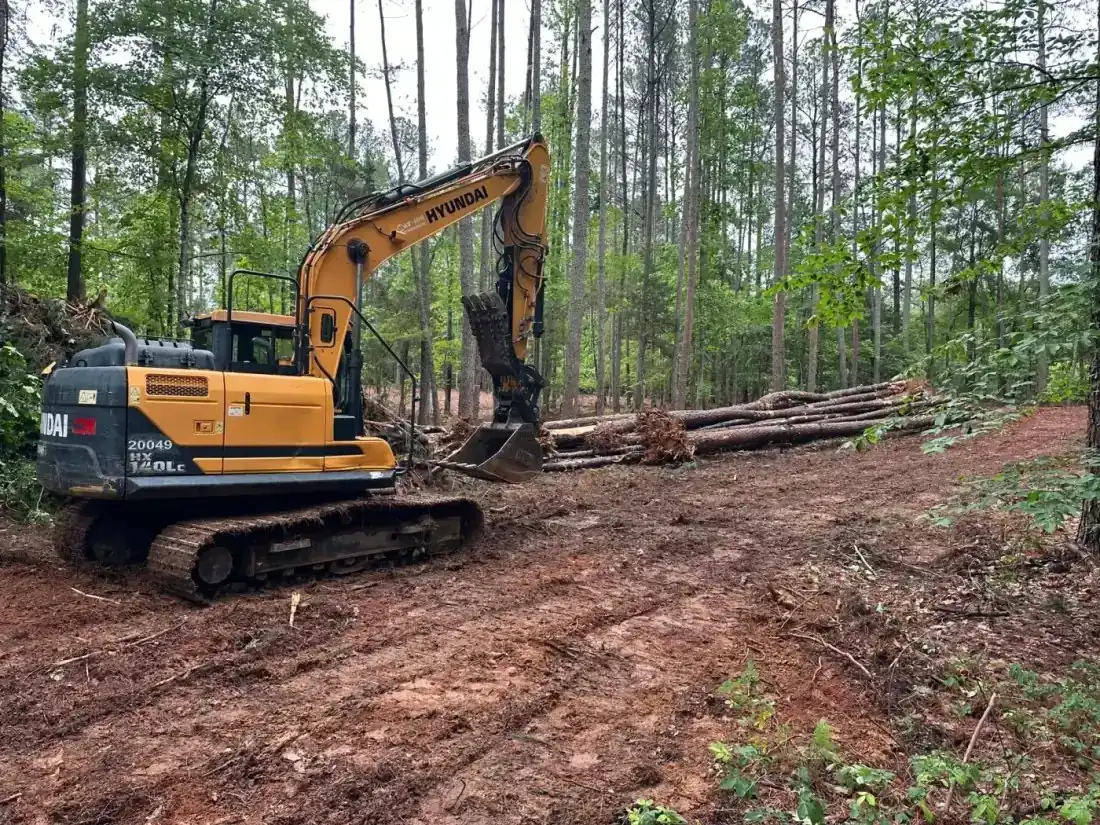
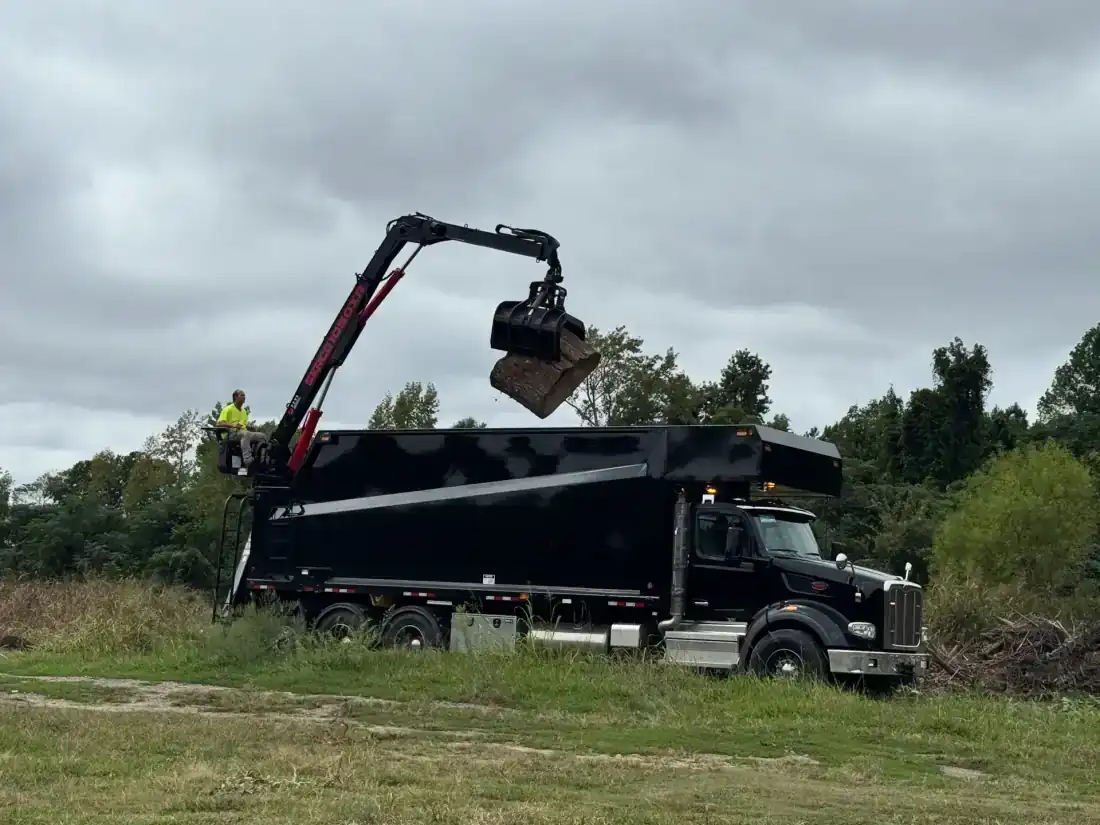
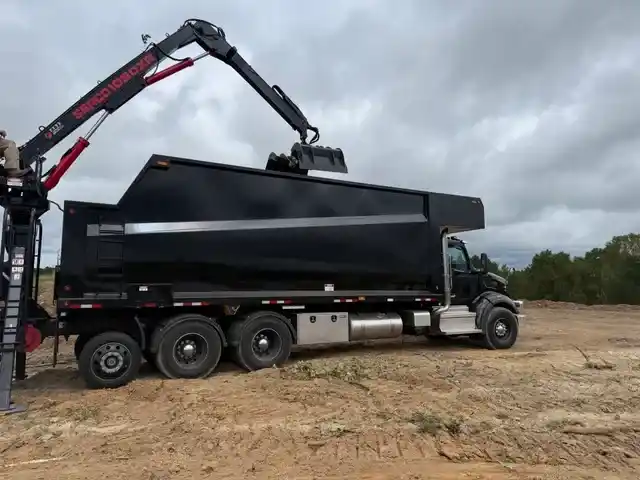
The Hyundai HX120LC excavator handles heavy clearing. The Takeuchi mulcher handles brush and small timber. The Peterbilt grapple truck hauls debris at $900 per load or $700 at a three-load minimum. Flat rural parcels around Littleton, Gaston, and the NC-158 corridor are straightforward equipment work with good road access.
For clearing pricing by acre and lot type, see our land clearing cost guide.
Storm Damage and Emergency Response
Lake Gaston waterfront catches weather from two directions. Hurricanes and tropical storms track inland from the coast and push wind across the open water — shoreline trees on the windward bank take the full force. Ice storms in January and February coat pine canopies with weight they can’t carry, and the pines along the lakeshore snap and fall downhill toward the water, docks, and retaining walls.
Call (252) 506-0099 any time for emergencies. We’re about an hour from most Lake Gaston properties and we mobilize immediately for trees on houses, docks, or roadways. During major storm events we can stage crews closer to the lake when conditions allow.
For pre-storm preparation, our pre-hurricane tree hazard audit guide covers what to inspect before June 1.
Stump Grinding and Tree Trimming
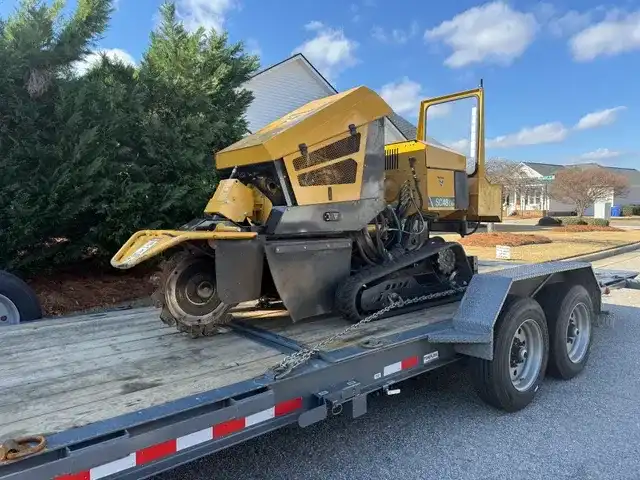
Stump grinding on lakefront slopes is more involved than flat-ground work — getting the grinder to the stump and managing the grindings on a slope requires planning. We grind stumps below grade with the Vermeer SC48TX and backfill with the grindings. For stumps in the buffer zone, we leave the root system intact to stabilize the bank.
Tree trimming on lakefront specimen trees — mature oaks, pecans, and bald cypress that frame the view and anchor the property — is climbing work, not bucket-truck work. Most lakefront lots don’t have bucket-truck access. Our climbers handle crown reduction, deadwood removal, and clearance work from the canopy.
Dominion Energy Shoreline Management Plan — What You Need to Know
Lake Gaston is a Dominion Energy reservoir managed under a FERC license. The Shoreline Management Plan controls what property owners can and can’t do within a vegetation buffer along the shoreline.
The basics:
- Selective thinning is generally allowed. You can remove dead trees, hazard trees, and selectively thin to create a view corridor.
- Clear-cutting to the waterline is not allowed. The buffer exists to stabilize the bank, filter runoff, and protect the lake ecosystem.
- Understory clearing is generally allowed within the buffer, as long as the root systems of canopy trees aren’t disturbed.
- Specific rules depend on your lot classification under the SMP. Residential, commercial, and undeveloped parcels have different allowances.
- When in doubt, call Dominion’s Lake Gaston office before cutting anything inside the buffer. We can help you with that conversation.
We walk lakefront properties with the SMP in mind. If a tree is inside the buffer, we tell you before the estimate — not after. Our scope accounts for what’s permitted and what isn’t.
Nearby Service Areas
Littleton is part of our Halifax County service area. We also serve:
- Roanoke Rapids — largest town in Halifax County, about 20 minutes from Littleton
- Nash County — our home base in Rocky Mount
- Edgecombe County — Tarboro and surrounding areas
Lake Gaston also extends into Warren County and Northampton County on the NC side. We evaluate lakefront jobs in those counties on a case-by-case basis — if the scope justifies the drive, we’ll do the work.
For pricing on all our services, see the pricing guide.
Get a Free Estimate on Lake Gaston
Call (252) 506-0099 or request an estimate online. We walk the property, explain the buffer situation, and give you a real number before any work starts. If you’re an absentee owner, we’ll send photos, video, and a written scope for your review.
For more on our full Halifax County coverage, see our Halifax County tree service and Roanoke Rapids tree service pages.