Pre-Hurricane Tree Hazard Audit: What to Check Before the Next Storm


Want a firm price instead of a ballpark? Free estimate in about 2 minutes.
Get Free EstimateTable of Contents
Hurricane Season Runs Through November 30. Is Your Yard Ready?
I’m Anthony Caracappa, owner of DC Tree Cutting and Land Service. We’ve worked storm cleanup after every major system that’s hit Eastern NC since we opened in late 2022, and the record of what Floyd, Matthew, and Florence did to this region is written all over the towns we work in. The trees that come down in a hurricane are almost always the same trees someone could have dealt with in April. That’s not hindsight. It’s the pattern.
I wrote a full guide on storm damage tree cleanup for what to do after a tree comes down. This is the guide for what to do before one does.
Hurricane season runs June 1 through November 30, and mid-August through October is the stretch that has historically done the damage here. Whether you are reading this in April with weeks to spare or in September with a system already spinning in the Atlantic, the job is the same: walk your yard, figure out which trees are most likely to come down, and get the work done. Thirty minutes outside with this checklist can save you thousands of dollars and weeks of dealing with insurance adjusters, emergency crews, and a hole in your roof.
I’d rather you never need our emergency tree service. That’s the whole point of this post.
The 10-Point Pre-Hurricane Tree Audit Checklist
Walk your yard with your phone. Take photos as you go. Mark anything that concerns you.
-
Dead trees within one tree-length of your house, garage, deck, or driveway. A dead tree is coming down eventually. The only question is whether it falls when you choose or when a storm chooses for you. If you’re not sure whether a tree is dead, our 8-sign guide to dead and dying trees walks you through the checks.
-
Dead limbs 4 inches or thicker hanging over your roof. These don’t need a full storm to fall. A strong thunderstorm in July will do it. Get them trimmed now.
-
Any tree with a lean that wasn’t there last year. New lean means the root system is failing. That tree is on borrowed time. See our 7 signs of a hazardous tree for the full list, but a new lean is the one that scares me most.
-
Mushrooms, conks, or soft spongy bark at the base of a large tree. That mushroom you see is the visible part of an organism that’s been eating the wood from the inside for years. A water oak with mushrooms at the base can look perfectly healthy from 20 feet away and be hollow enough to collapse in a moderate wind event.
-
Vertical cracks or splits in the trunk. This is the one that kills people. A cracked trunk doesn’t lean first — it goes all at once. No warning.
-
Root damage from recent construction, grading, or trenching. New driveway, septic install, utility work in the last five years? Any tree whose root zone got cut is living on borrowed time. Takes years to show the stress. Comes down in a second.
-
Tree crowns touching your roof or within 10 feet of power lines. Branches that rub your roof in a 20 mph breeze will go through it in a 70 mph gust. Deal with anything near power lines now — Duke Energy coordinates de-energization for line-clearance work, but they’re not doing that during a hurricane.
-
Dense clusters where trees can domino into each other. The tree that hits your house isn’t always the one you were worried about. Sometimes it’s the pine 40 feet back in the woods that falls into the oak that falls into the tree over your bedroom. Look at the domino paths, not just individual trees.
-
Trees in flood-prone areas — especially along the Tar, the Neuse, or Contentnea Creek. If the ground around a tree stays wet for days after heavy rain, the root system is sitting in soup every time a tropical system dumps 4-6 inches. Sweetgums and water oaks in those zones are the ones that come out of the ground.
-
Bradford pears anywhere near something you care about. I’m not going to sugarcoat this one. Bradford pears split apart in any significant wind event. The included bark at every major branch union is a structural defect by design. If you’ve been hoping yours will survive one more season, it won’t. Remove it.
Which Trees Snap, Which Uproot, and Which Survive
Not every tree goes down the same way. Knowing how a species gives way tells you what to look for and how fast you need to move. See our NC tree guide for full species profiles — this is specifically about storm behavior.
| Species | How It Fails in a Hurricane | Risk | What to Do About It |
|---|---|---|---|
| Water oak | Internal rot causes trunk collapse. The whole tree goes at once. You don’t get a warning lean. | High | Get any water oak over 40 years old professionally assessed. Sound the trunk. |
| Loblolly pine | Brittle wood snaps clean at 20-30 feet. Falls like a telephone pole. Edge trees catch the full wind load. | High | Remove any loblolly within fall range of a structure. Check for pine beetle (pitch tubes, brown needles). |
| Bradford pear | Splits apart at branch unions in any significant wind. Included bark at every fork. | High | Remove. Period. |
| Sweetgum | Uproots from waterlogged ground. Root ball comes out whole. | Moderate-High | High priority in flood zones. Lower risk on well-drained lots. |
| Red maple | Codominant stems split. Can uproot in soaked ground but less prone than sweetgum. | Moderate | Reduce canopy sail. Trim deadwood. Address any V-crotch unions. |
| Pecan | Survives wind well but drops heavy limbs. V-crotch splits in ice and wind. | Moderate | Trim dead limbs and address split crotches. The trunk is usually solid. |
| Willow oak | Deep roots, strong wood. Most storm-resilient oak in Eastern NC. | Low | Trim deadwood and you’re usually fine. |
| Dogwood | Small enough that failure rarely threatens structures. | Low | Not a storm prep priority. |
The short version: water oaks, loblolly pines, and Bradford pears near your house are the trees to deal with before the next system. Everything else is a judgment call. Those three are not.
The Cost Math: Remove It Now vs. Remove It After
This is the conversation I have on almost every pre-storm estimate. The homeowner knows the tree needs to come down. They’ve known for two years. The question is always the same: can I get one more season out of it? And the answer is always the same too.
| Scenario | Planned Removal (on your schedule) | After It Falls on Your House |
|---|---|---|
| 40-foot water oak, 15 ft from house | $1,500 — $2,500 | Emergency removal + tarp + structural damage = quote-based, a lot more |
| 80-foot loblolly pine over garage | $3,000 — $5,000 | Emergency removal + roof damage + insurance deductible = quote-based |
| Three dead Bradford pears near driveway | $1,500 — $3,000 total | Three separate emergency calls during demand surge = quote-based per event |
| Add stump grinding | $250 — $1,000 | Same, plus you’re also replacing a fence or section of driveway |
I’m not going to put a dollar amount on emergency removal because every emergency is different. What I will tell you is that the tree removal is the cheapest part of the problem. The roof repair, the insurance deductible, the weeks living with a tarp over your bedroom, the lost time fighting with an adjuster — all of that goes away if the tree comes down on your schedule instead of the storm’s.
See our tree removal cost guide for the full size-by-complexity breakdown. Stump grinding costs are covered separately. If the cost of preventive removal is more than you can handle at once, we offer financing through Wisetack — see our financing page or read about all your payment options.
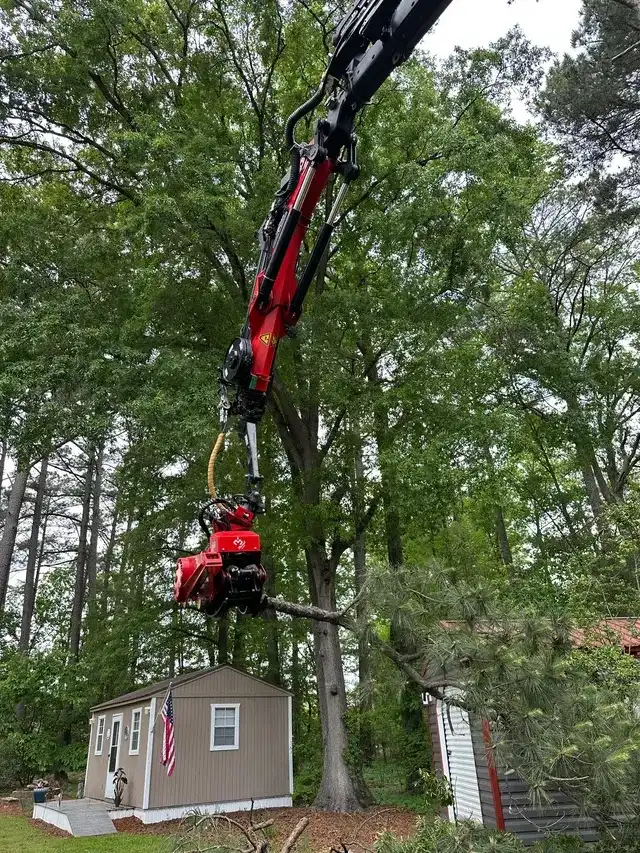
What Pre-Storm Removal Looks Like
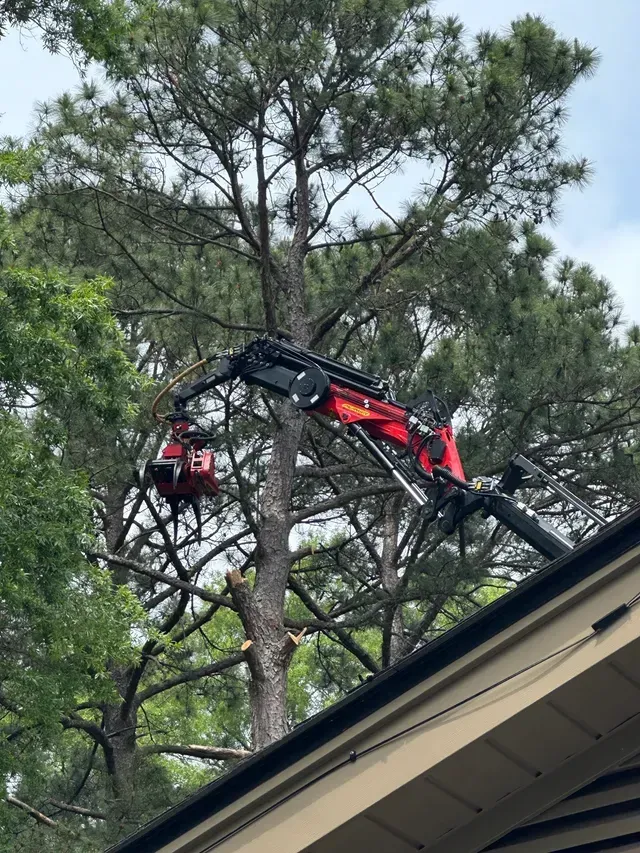
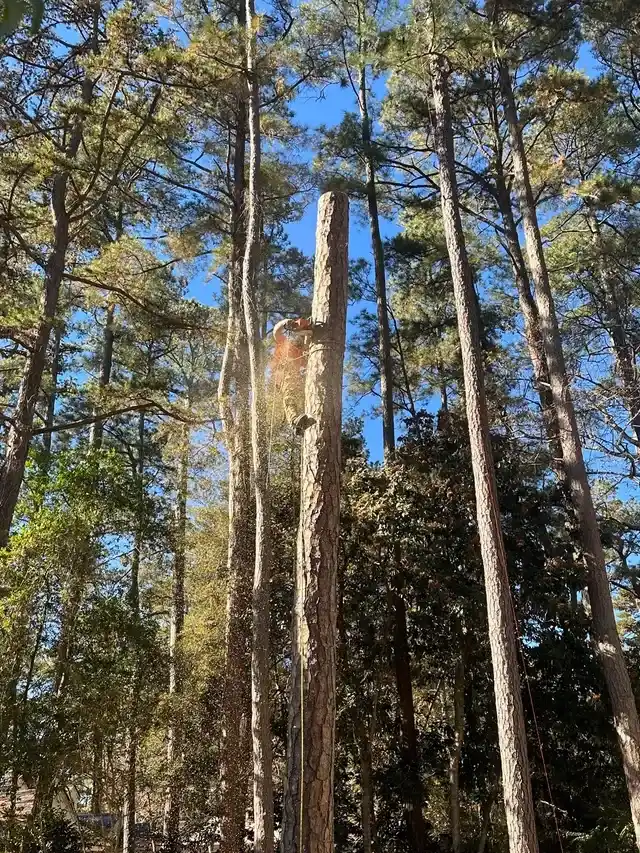
The classic pre-storm call is beetle-killed pines: brown needles and pitch tubes show up in spring, and by the time the needles turn, the wood is already brittle. Sixty-foot dead pines within a tree-length of the house are exactly what hurricanes turn into emergency calls — and when a storm hits, every tree service in the county is booked for weeks. Getting them down in the off-season means watching the storm from your living room with nothing overhead.
The other one is the hazard you can’t see from the street: a big water oak with mushrooms at the base and a canopy just starting to thin. Sounding the trunk with a mallet finds the hollow sections. A tree like that directly over a deck or roofline is a removal decision, not a trimming decision — and it’s a far cheaper, calmer job in April than in the week after a tropical system.
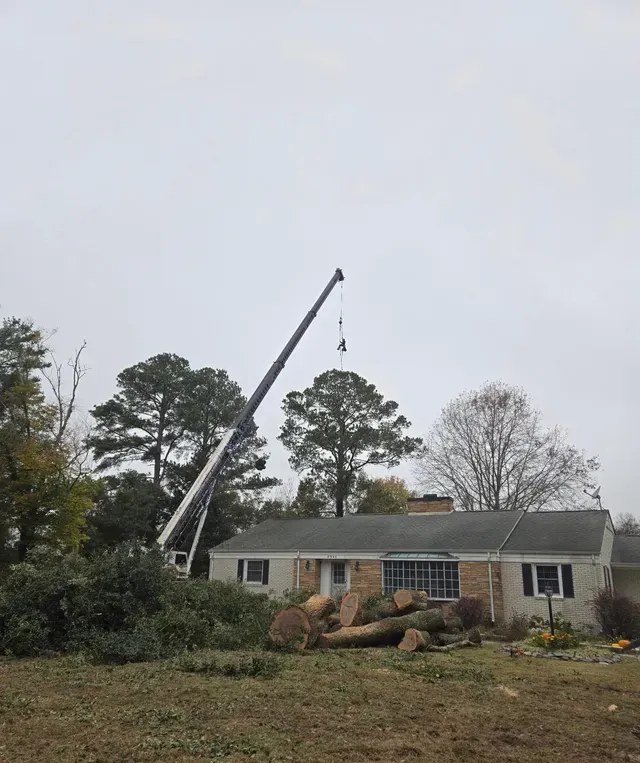
The one big pre-storm removal we can point to publicly: the three street oaks in Scotland Neck — six-foot bases, live power lines through the crowns, compromised wood — taken down with a 65-ton crane before they could pick their own moment to fail.
Document Everything Before the Storm Hits
Even if you get every problem tree removed, storms are unpredictable. A healthy tree can still come down in a Cat 2. The smartest thing you can do right now — besides the audit itself — is document your yard so insurance claims move faster if the worst happens.
Photograph every large tree on your lot. Walk a full circle around each one. Get the whole tree, the base and root flare, any visible defects, and the relationship to your house and other structures. Use your phone’s date stamp or drop a pin with the date in a note.
Write down a basic inventory. Species if you know it, approximate height, approximate distance to the nearest structure, and anything you noticed. You don’t need a spreadsheet. A note in your phone with photos attached works fine.
Keep your tree service invoices. If you’ve had trimming, removal, or an assessment done — keep the paperwork. After a major storm, homeowners who can hand their adjuster a recent invoice showing maintenance and “no hazards identified” have cleaner claims than homeowners who can’t show they’d done anything.
Shoot a few wide photos from the street. Before and after storm photos showing the full yard from a distance are surprisingly useful for adjusters trying to figure out what changed.
One thing most people don’t know until it’s too late: your homeowner’s policy covers tree removal when a tree damages an insured structure. It does NOT pay to remove a tree that fell in the yard without hitting anything. Our storm damage guide has the full insurance breakdown.
County-by-County Storm Priorities
Every county in our service area has different risk factors. Here’s what to focus on depending on where you are.
Nash County and Edgecombe County — Tar River corridor. The Tar floods fast. Princeville is the most flood-prone community in North Carolina. Trees along the river corridor sit in soaked ground for weeks after heavy rain. Sweetgums and water oaks in the floodplain are the highest-priority removals. Pine beetle has weakened dense pine stands throughout Nash County — a beetle-killed pine in waterlogged soil is the worst combination you can have.
Pitt County — Greenville and east of I-95. Gets hit first by anything that comes up the coast. The Tar River floods through the middle of Greenville. Wet ground year-round means root systems are always partially compromised. The established neighborhoods around ECU have mature water oaks approaching end-of-life. If you’re in Greenville with a 50-year-old water oak over your house, that’s a phone call, not a wait-and-see.
Wayne County. The Neuse floods. Every time. Pine beetle in dense plantations east of Goldsboro, and nothing between you and whatever’s coming off the coast. If you’re east of 117 with a stand of loblolly between your house and the river, that’s your priority list.
Wilson County. Flat as a table. No ridgelines, no hills, no natural windbreaks. A row of loblolly pines on the west side of your lot catches the full force of any system rotating in from the south. If they’re within range of your house, deal with them now.
Johnston County. The fastest-growing county in North Carolina. New construction going in next to mature trees means root zones are getting cut by grading and trenching. Those trees look healthy for a year or two, then let go without warning. If you’ve had construction on your lot in the last five years, get your trees assessed.
Halifax County. Lake Gaston waterfront with large unmanaged tree stands — pines and oaks that nobody’s touched in 30 years. Rural lots where the first time anyone thinks about the trees is when one’s on the ground. If you own waterfront, a walk-through ahead of the next system is the cheapest insurance you’ll buy this year.
Greene County and Lenoir County. Rural properties in the hurricane corridor. Agricultural transitions leaving overgrown treelines along field edges. If you’ve got an acre of neglected pines between your house and an open field, forestry mulching clears it in a day. Better to mulch it now than chase it across your yard after a tropical system. See our forestry mulching cost guide.
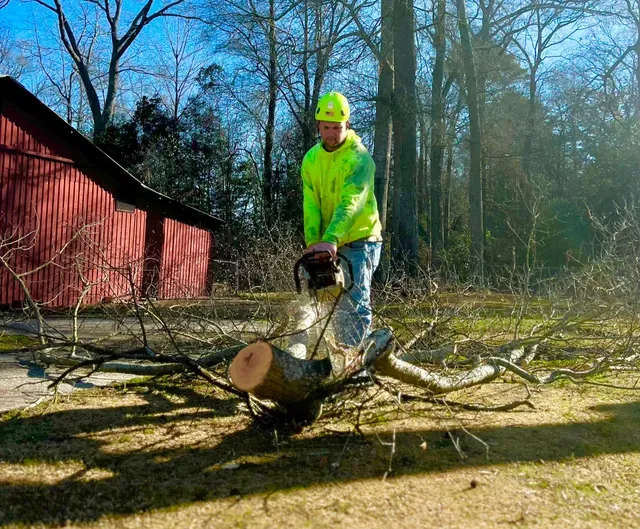
Schedule It Now. You Can’t Schedule It After.
In a normal week, we can usually schedule a property walk-through within a week and get the work done within two weeks of the estimate.
When a storm watch goes out, that window closes. The phone doesn’t stop, and every tree service in Eastern NC is booked at once.
After a storm hits, we triage. Trees on houses first. Trees on power lines second. Trees blocking driveways third. That dead pine in the back yard? That’s waiting until the emergency backlog clears. Could be days. Could be weeks.
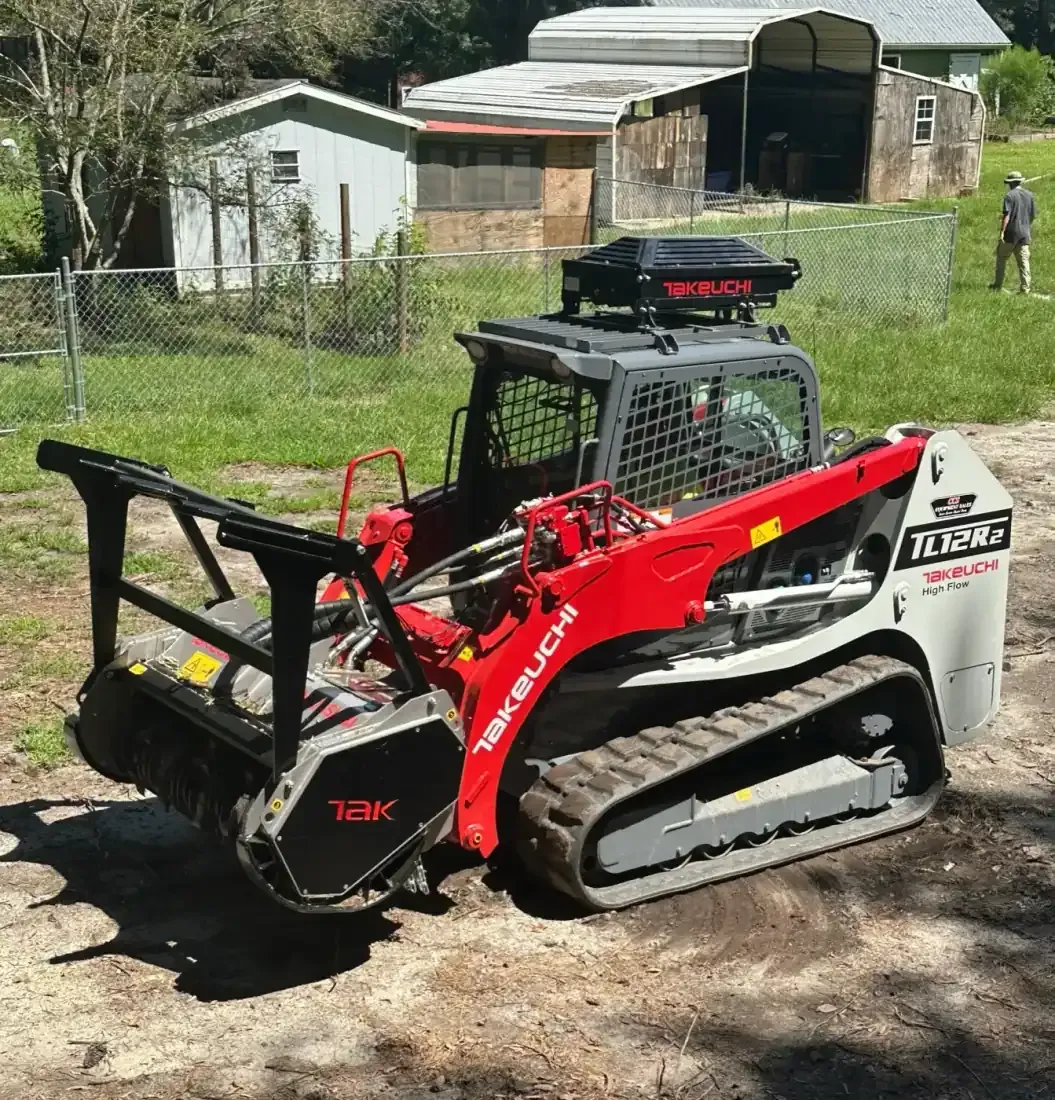
We bring the right equipment for the job — the Takeuchi TL12R2 for overgrown areas, the Vermeer SC48TX for stumps, a crane for anything over a structure, and the Peterbilt grapple truck for debris. If you’ve got a larger lot that’s been neglected, forestry mulching handles an acre of overgrowth in a day.
One more thing. After every major storm, guys with trucks and chainsaws show up from out of state, knock on doors, and quote low. They collect deposits and disappear, or do the work badly with no insurance and no recourse for you. If you do the preventive work now with a company you’ve vetted, you won’t be the homeowner standing in the yard with a damaged roof trying to figure out which door-knocker to trust. Read our guide on how to choose a tree service if you want the full checklist for vetting anyone.
Call (252) 506-0099 or request a free estimate online. We serve all nine counties from our offices in Rocky Mount and Goldsboro.
The Bottom Line
A hurricane doesn’t care whether you meant to get around to that tree. It doesn’t care that you were going to call someone next month. The water oak with the mushrooms at the base, the loblolly that’s been leaning a little more every year, the Bradford pear you’ve been hoping will hold together one more season — those are the trees that go first.
Thirty minutes walking your yard with this checklist. One phone call. That’s the difference between watching the storm from your living room and standing in your yard at midnight while a crew tarps your roof. Our Eastern NC tree problems guide covers all five major issues that put trees at risk before storm season.
I’ve cleaned up after every major storm in this region since I opened this company. The customers who did the work before the season aren’t the ones calling me at 2 AM.
Free walk-throughs across all nine counties. Call (252) 506-0099. The storm won’t call first.
Frequently Asked Questions
When should I have my trees inspected before hurricane season?
How much does a pre-hurricane tree inspection cost?
Which trees are most likely to fail in a hurricane in Eastern NC?
Is preventive tree removal cheaper than emergency removal after a storm?
What photos should I take of my trees before hurricane season?
Do you do pre-storm tree inspections across all of Eastern NC?

Owner, DC Tree Cutting and Land Service
Anthony runs DC Tree Cutting from Rocky Mount, NC. Every article is based on real jobs, real equipment, and real pricing from across Eastern North Carolina. More about Anthony →