How to Hire a Tree Service in Eastern NC (Without Getting Burned)
 Anthony Caracappa 8 min read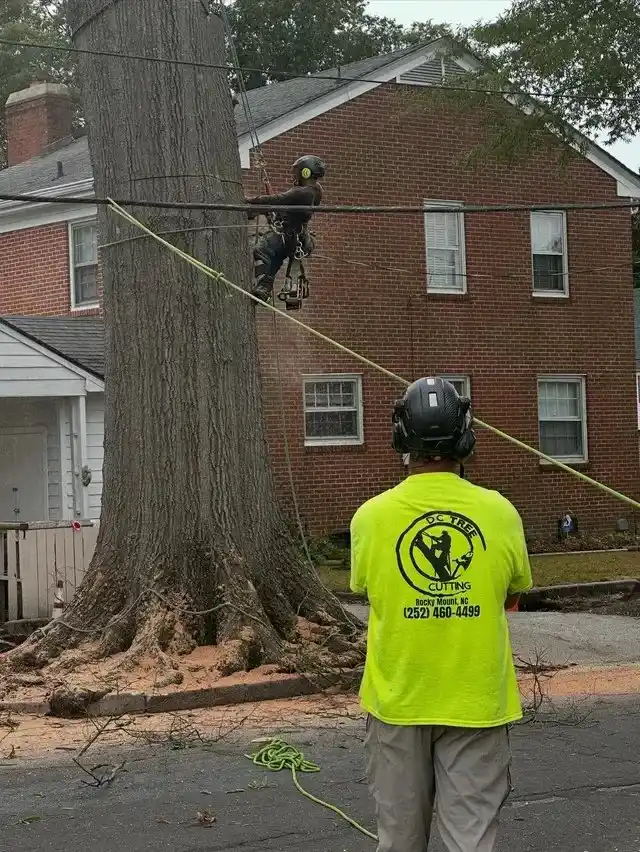


Want a firm price instead of a ballpark? Free estimate in about 2 minutes.
Get Free EstimateTable of Contents
You Have Quotes on the Kitchen Table. Now What?
I’m Anthony Caracappa. I own DC Tree Cutting and run crews out of Rocky Mount and Goldsboro across nine counties in Eastern NC.
This page isn’t about how great we are. It’s the conversation I’d have with a friend who just got three quotes and doesn’t know which one to trust. North Carolina doesn’t require a license for tree work — no exam, no certification, nothing. Anybody can buy a chainsaw and print business cards tomorrow. That’s why hiring a tree service is harder than it should be.
Whether you hire us or somebody else, there are things you can check in 15 minutes that will tell you more than a sales pitch ever will.
The Insurance Question That Matters Most
I’m not going to repeat the full insurance breakdown here — I wrote an entire guide on verifying tree service insurance that covers it in detail. But here’s the 60-second version.
Call the company. Say: “Can you email me an ACORD certificate of insurance naming me as the certificate holder?” Any real company does this within a day. If they hedge, if they say it’s “in the truck,” if they get offended — you just saved yourself a disaster.
The certificate should show three active policies: general liability, workers compensation, and commercial auto. Most tree services in Eastern NC carry one. Some carry none. The ones carrying all three are the ones charging 20-40% more than the low bidder, and now you know why.
I’ll say it plainly: if someone gets hurt on your property and the company doesn’t carry workers comp, that becomes your problem. Not theirs. Yours. The full insurance guide walks through exactly what each policy covers and what happens when it’s missing.
Comparing Quotes: What to Actually Look At
You’ve got two or three estimates. Don’t just look at the bottom number. Put them side by side and check what’s included.
The five things every written estimate should answer:
- Which trees, what work (removal, trimming, grinding — spelled out)
- Stump grinding included or separate
- Debris removal method and whether full cleanup is in the price
- Start date and expected duration
- Payment terms and methods
If a quote is verbal only, has no company name or address on it, or says “we’ll figure out the stump after” — that’s not an estimate. That’s a handshake you’ll regret.
What’s normal for timeline: A single tree removal usually takes half a day. A crane job might take a full day with setup. A multi-tree job or small lot clearing is 1-3 days. If someone quotes three weeks for one tree, ask why.
What’s normal for payment: Most residential jobs are pay-at-completion. We don’t require deposits on most work. If a company wants a large deposit before touching a saw, that’s unusual for residential tree service in this area.
The Low Bid: Why It’s Almost Never What It Seems
I wrote a whole post about this: Why We’re Not the Cheapest Tree Service. Short version:
I bid against these crews regularly. They come in at a fraction of a real quote. The homeowner sees the gap and picks the cheap one. Then weeks later the phone rings — the tree is half-down, the crew vanished, and there’s a stump nobody mentioned.
The gap is almost always insurance and cleanup. Three insurance policies cost real money. W-2 payroll costs more than paying day laborers cash. A grapple truck that hauls every branch off site costs more than chipping what fits and leaving the rest. Those are the things hiding behind a quote that’s 40% below everyone else.
A quote that’s significantly below every other bid isn’t a deal. Ask what’s included. Ask for the insurance certificate. The answers usually explain the price.
For what tree service actually costs in our area, see our tree service cost guide.
Storm Chasers: What Happens After a Hurricane
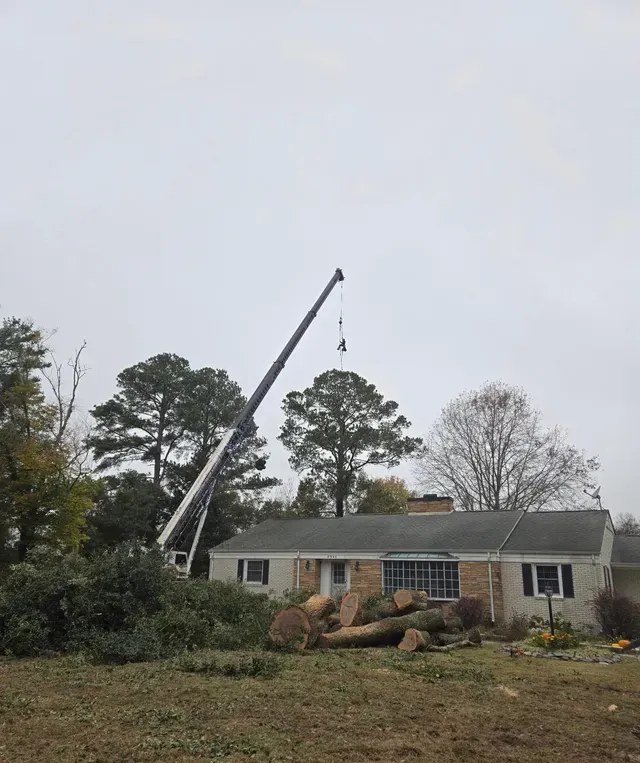
After every significant weather event in Eastern NC since we opened, we end up fixing jobs that out-of-state crews botched or abandoned in Nash County, Edgecombe County, and across our service area.
The playbook is always the same. Crew rolls in from three states away in a pickup with out-of-state plates. Knocks on doors, quotes $500 cash, does half the work, and disappears. No insurance, no local address, no phone number that works next week.
How to tell a storm chaser from a local crew: Does the company have Google reviews you can read? A local address, not a PO box? An insurance certificate they can produce on the spot? If any of those answers are no, say no.
If you’ve got a tree on your house right now and need emergency service, call a company you can verify. We answer 24/7 at (252) 506-0099 and run out of two yards — Rocky Mount and Goldsboro — so a crew is never far. Our storm damage cleanup guide covers what to do first when a tree comes down.
What a Professional Job Looks Like
You signed the estimate. The crew is scheduled. Here’s what should happen on the day, so you know what to measure against.
Before the first cut. The crew lead walks the property with you, confirms which trees are being worked, and points out anything they need to protect — your fence, the power line, the septic lid the lawn has grown over. If nobody walks the property with you before starting, that’s a problem.
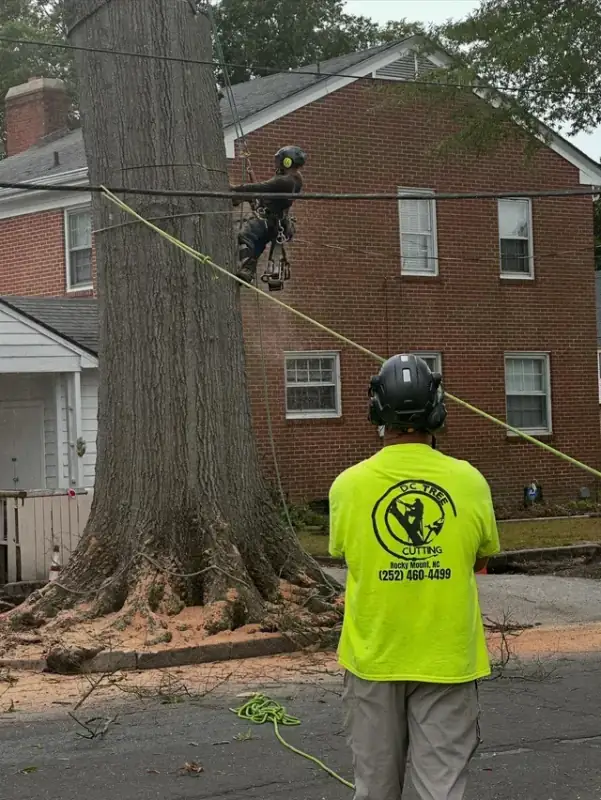
During the work. On a removal near your house, a climber goes up and cuts sections that the ground crew lowers on ropes. Nothing free-falls near structures. That’s non-negotiable. On the ground, debris gets chipped or stacked for the grapple truck. You should be able to watch from the window and see a plan, not chaos.
After the tree is down. Stump grinding if it’s in the scope. Full cleanup — the yard should look like nobody was there except the tree is gone. Not a pile of chips where the trunk was. Not ruts from the truck that nobody fixed. Clean.
What happens if something goes wrong. If the crew damages your fence, your siding, or your sprinkler line — and this does happen even with careful work — a properly insured company handles it through their liability policy. You file nothing. If the crew is uninsured, the damage comes out of your pocket. That’s the real cost of saving 30% on the quote.
When to Schedule Tree Work
Late fall through early spring is the slowest season for tree service in Eastern NC. Scheduling is faster, some companies adjust pricing, and the ground is typically firmer (better equipment access). If your tree isn’t an emergency, this is the cheapest time to get it done.
April through mid-May is when you want to deal with anything before hurricane season starts June 1. Planned removal before a storm costs significantly less than emergency removal after one. See our tree problems guide for what to inspect.
Avoid calling the week after a major storm unless it’s genuinely an emergency. Every crew in the area is slammed. Wait 2-3 weeks and the pricing and availability normalize.
The Decision: When Two Companies Both Look Good
Your insurance check passed. Both quotes are written, detailed, and within 20% of each other. Now what?
Google reviews matter, but read them. A 4.8 with 200 reviews where people name specific crew members and describe real jobs means more than a 5.0 with 12 generic reviews.
Ask who shows up. “Will the person I’m talking to now be on the job site?” Some companies sell the work with one person and send a different crew. Not necessarily bad, but worth knowing.
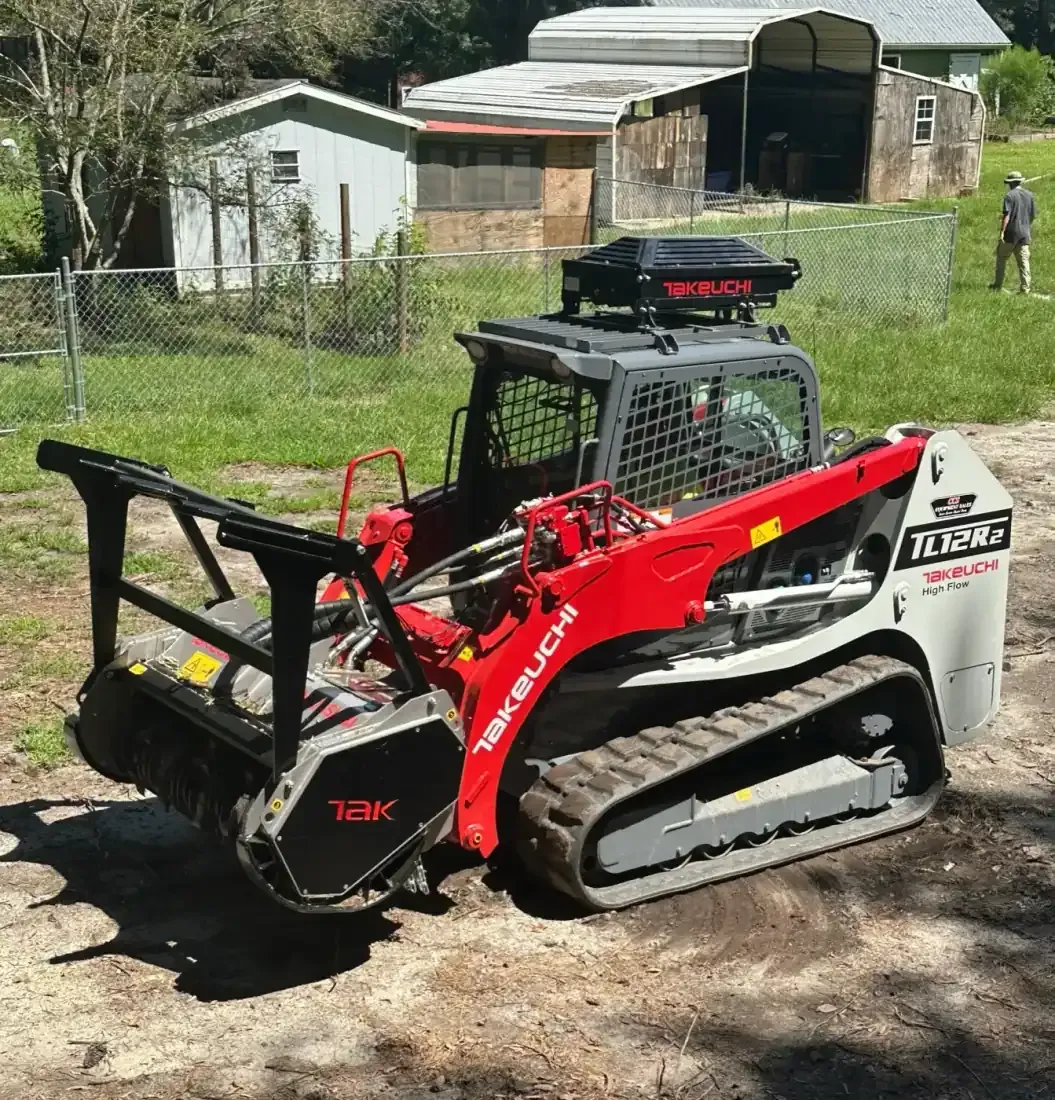
Ask about their equipment. A company that owns a commercial stump grinder, a grapple truck, and climbing gear is making long-term investments in the work. A company that rents everything or subs it out isn’t necessarily worse, but it means more variables on your job.
Trust your gut on communication. The company that returned your call the same day, showed up when they said they would for the estimate, and sent the insurance cert without being asked twice — that’s probably the company that runs the job the same way.
For a deeper walkthrough of the full hiring process, How to Choose a Tree Service covers everything from the first phone call through day-of expectations.
Quick-Reference Hiring Checklist
Before you sign:
- Insurance certificate on file (all three policies: liability, workers comp, commercial auto)
- Written estimate with scope, timeline, payment terms, and company contact info
- Google reviews you’ve actually read
- Local address you can verify
- W-2 employees (ask directly: “Are your crew W-2 or contractors?” — hesitation is your answer). We post our open positions with pay ranges because we have nothing to hide
- Full debris removal and site cleanup included in the price
- Stump grinding addressed (included or quoted separately — but addressed, not ignored)
If all of those check out, you’ve found a solid crew. Pick the one whose communication you trust and whose scope matches what you need.
For pricing on all our services, see our complete tree service cost guide. For the tree problems that drive most of these calls, see our guide to tree problems in Eastern NC.
Not a Homeowner?
If you’re a property manager, HOA board member, or general contractor, the hiring bar is higher. Insurance endorsements (CG 20 10, CG 20 37), umbrella coverage, waiver of subrogation, phased scheduling, and documentation requirements are different from residential work.
We wrote dedicated guides for each:
- Property Manager Tree Service: NC Hiring Guide
- HOA Tree Maintenance in NC
- Utility Corridor Clearing & Waterline Tree Removal
Get a Real Quote
Call (252) 506-0099 or request a free estimate. We come out, look at the job, and give you a firm written price before we start. Three insurance policies on every job, full cleanup included, and a phone number that works tomorrow.
Frequently Asked Questions
How do I find a reliable tree service in Eastern NC?
What insurance should a tree service have?
Why is one tree service quote so much cheaper than the others?
Should I hire a tree service that knocks on my door after a storm?
What questions should I ask before hiring a tree service?
Do tree services in NC need a license?
When is the best time to hire a tree service?
Owner, DC Tree Cutting and Land Service
Anthony runs DC Tree Cutting from Rocky Mount, NC. Every article is based on real jobs, real equipment, and real pricing from across Eastern North Carolina. More about Anthony →